
Sockeye Salmon in Alaska: Bristol Bay Run, Timing & Why They Turn Red
Every summer, something remarkable happens across the wild rivers and lakes of Southwest Alaska.
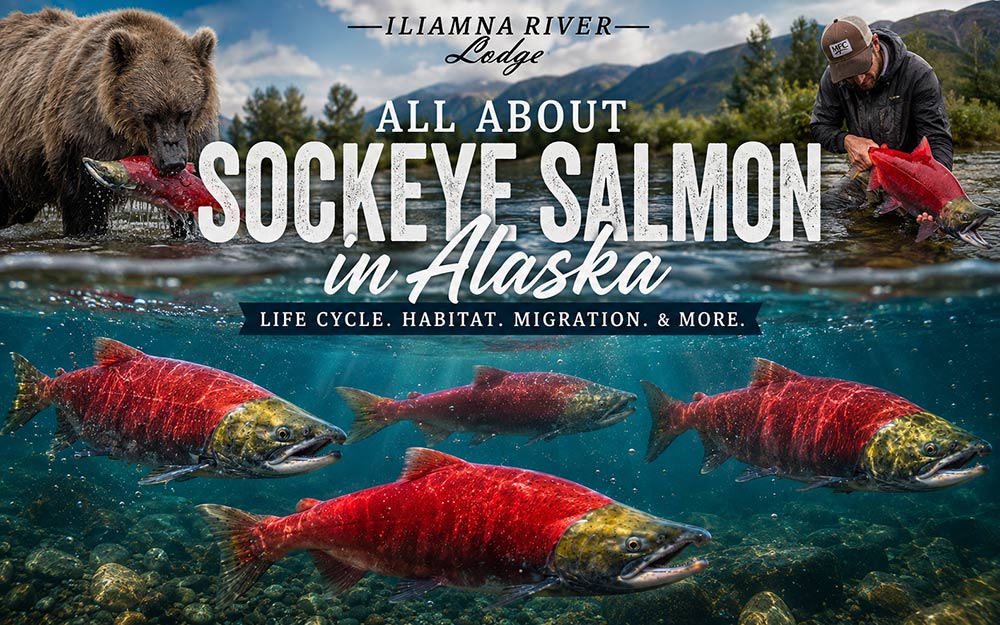
Millions of sockeye salmon leave the cold North Pacific and head back through Bristol Bay to the freshwater systems where they were born.
For anglers, that run means hard-fighting fish, screaming reels, and a classic Alaska trip. For people interested in fly fishing salmon in Alaska, few places match this scene.
But the run means more than fishing.
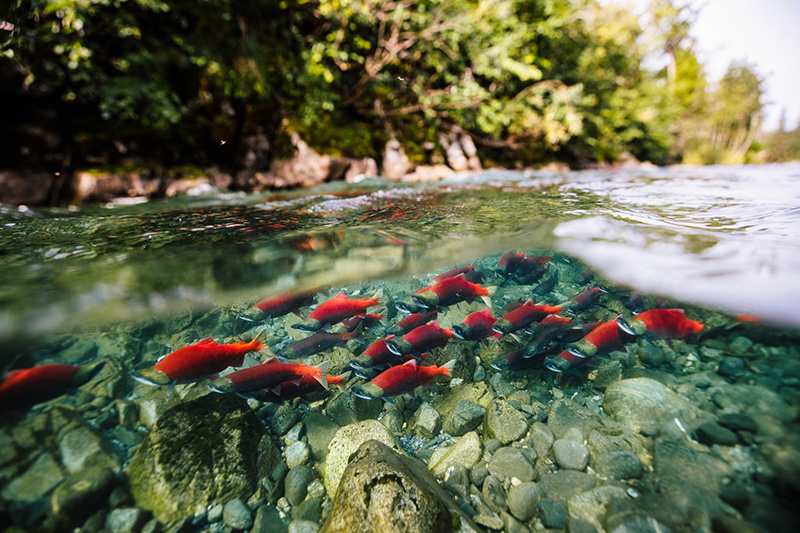
These fish connect the North Pacific Ocean to the rivers, lakes, wildlife, and even the forests of Alaska’s remote interior. Bears wait on the banks. Eagles circle above. Rainbow trout and Dolly Varden feed on the eggs. After spawning, the salmon return nutrients gathered during years at sea back into the freshwater ecosystem.
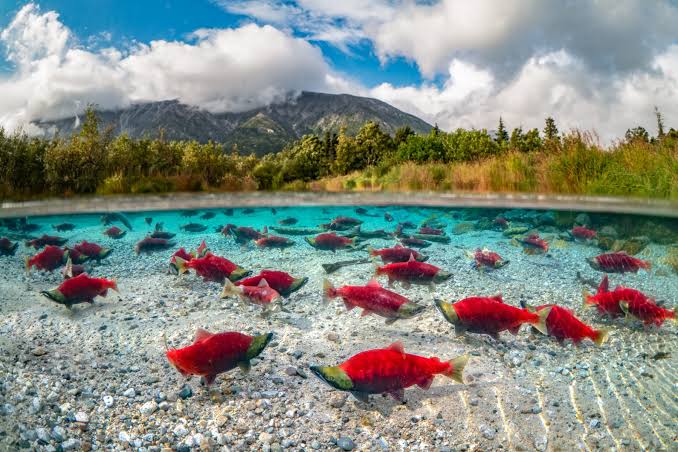
photo https://fish.uw.edu/2
In a very real sense, sockeye salmon are the red lifeblood of Bristol Bay.
What Is a Sockeye Salmon?
Sockeye salmon (Oncorhynchus nerka) are one of five Pacific salmon species found in Alaska.
Alaska sockeye salmon are also one of the best known.
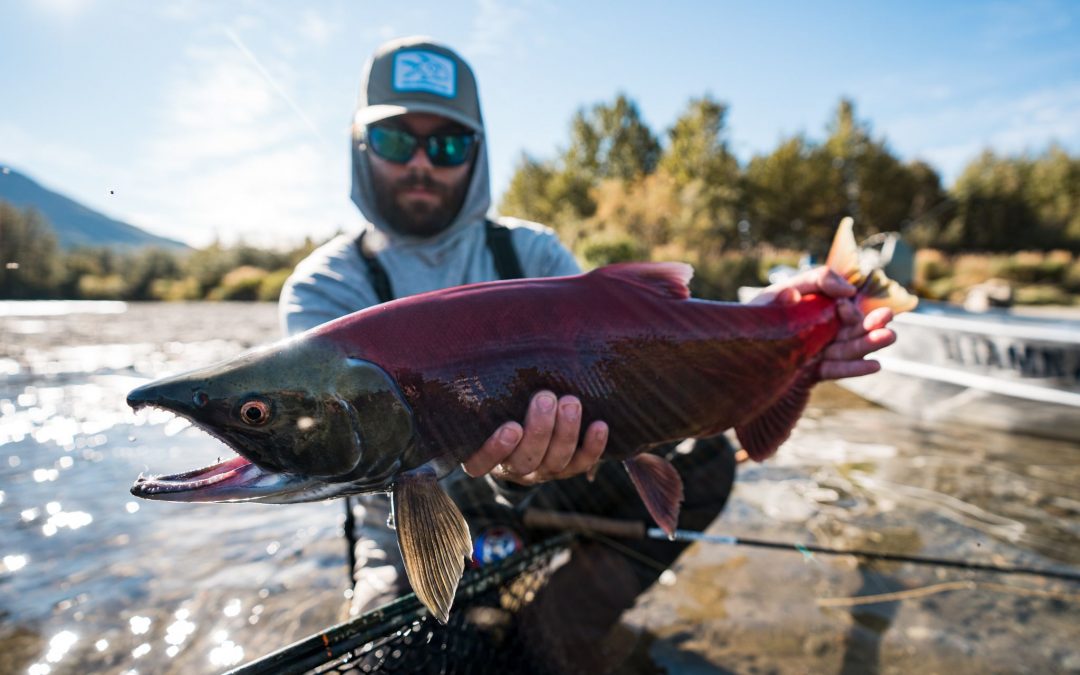
In the ocean, sockeye look very different from the red fish most people picture. Ocean fish have silver sides, a pale belly, and a blue-green back. That look has earned them the nickname bluebacks.
Everything changes when they return to freshwater.
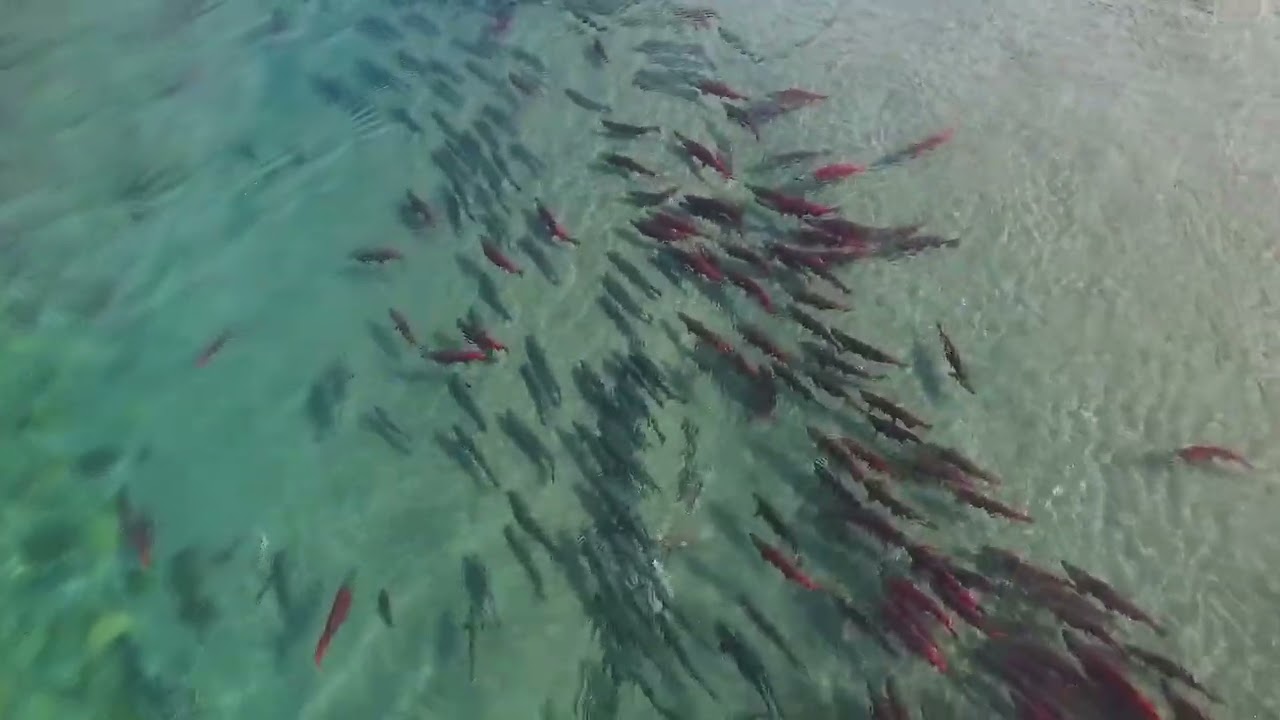
As sockeye approach spawning grounds, their bodies change from silver to a deep red. Their heads turn green. Mature males also grow a hump and a hooked jaw.
The change is one of the most striking in any Alaska gamefish.
And that red color starts with what sockeye eat.
Why Do Sockeye Salmon Turn Red?
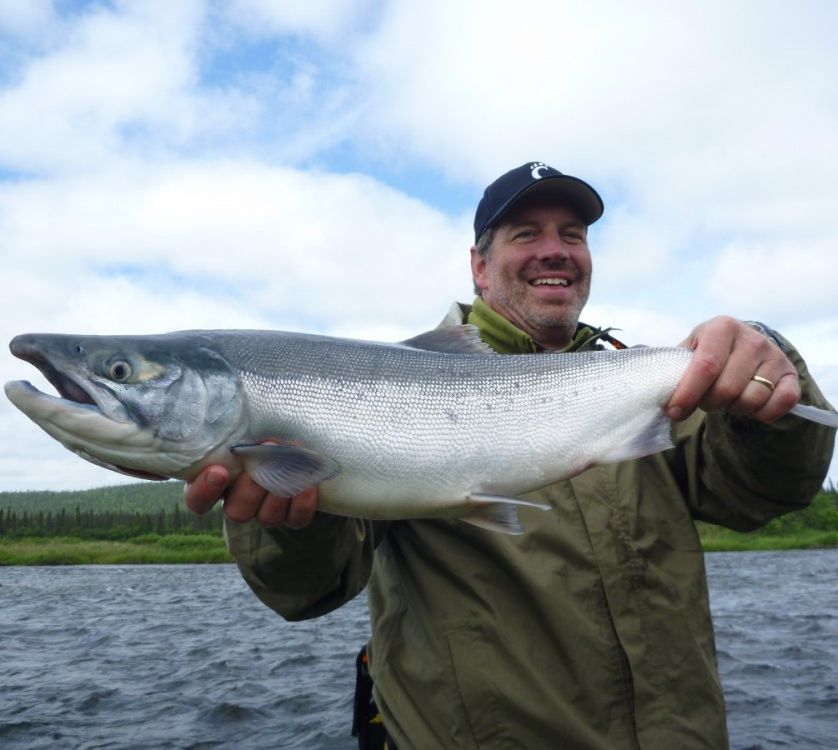
Sockeye feed on zooplankton and small crustaceans that contain carotenoid pigments. These pigments help give sockeye flesh its orange-red color.
As the fish mature and return to freshwater to spawn, their body changes are dramatic. Pigments are moved as their bodies change for spawning, creating the bright red look of spawning sockeye.
So the color is not just for show.
It tells the story of the fish’s full trip—from feeding in the North Pacific to returning home to create the next generation.
And that red salmon becomes part of something even larger.
Where Do Sockeye Salmon Live?
Alaska sockeye salmon have an enormous natural range across the North Pacific.
In North America, populations run from the Pacific Northwest north through British Columbia and Alaska. They are also found on the Asian side of the Pacific.
But nowhere are sockeye more closely tied to the land than Bristol Bay, Alaska.
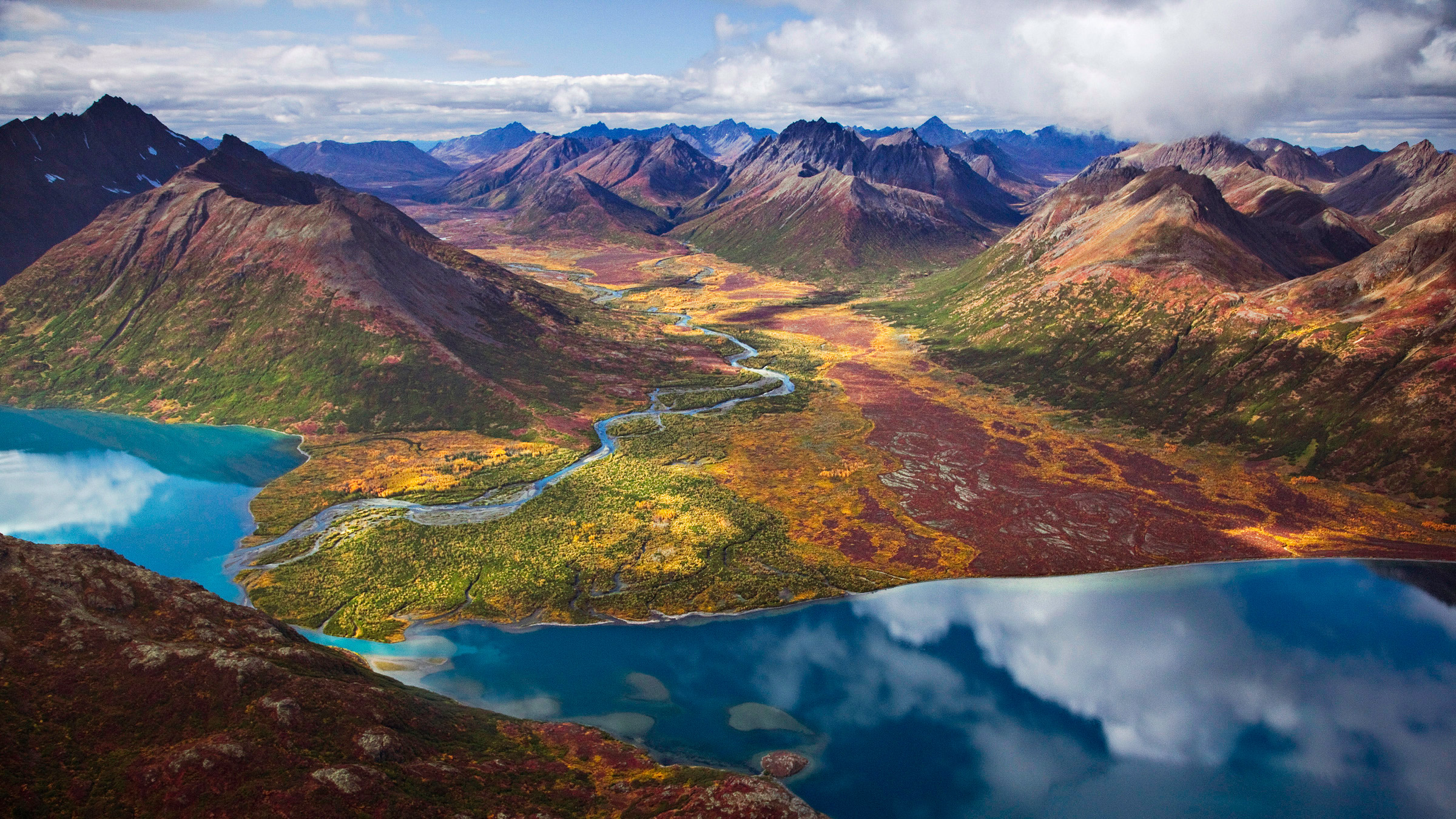
Bristol Bay supports the world’s largest sockeye salmon fishery, with huge runs returning to river systems including the Kvichak, Naknek, Egegik, Ugashik, and Nushagak.
The Lake Iliamna region is especially important.
Sockeye have a strong link to freshwater lakes. Young fish often spend their early lives in lakes and connected streams before moving downstream toward the ocean.
That makes the Lake Iliamna watershed and the rivers around it excellent sockeye habitat. If you’re wondering where to fish for sockeye in Alaska, this region is one of the best answers.
An Incredible Life Cycle
The sockeye’s life is one long round trip.
It begins under the gravel of an Alaska stream or in a suitable lake area.
Female sockeye create nests called redds, where thousands of eggs are laid and fertilized. The eggs stay protected under the gravel through the winter.
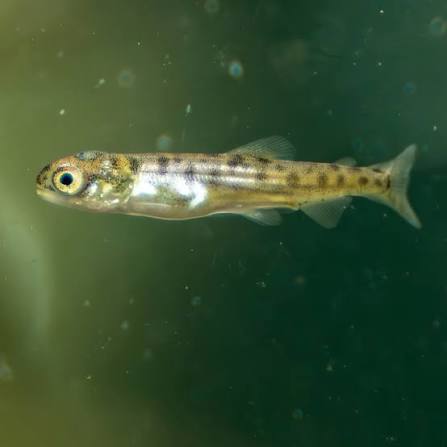
After hatching, the tiny salmon first live on nutrients in their yolk sacs. Then they emerge and start feeding.
Young sockeye often spend one to three years in freshwater, especially in lake systems, feeding on zooplankton, small crustaceans, and aquatic insects.
Eventually they undergo another remarkable body change.
They become smolts.
Their bodies adapt from freshwater to saltwater, and the young fish move downstream toward the sea.
Once they reach the ocean, their world is much larger.
Thousands of Miles Through the North Pacific
Sockeye may spend several years feeding and growing in the ocean.
Alaska sockeye can travel thousands of miles during this stage of life, moving through the rich waters of the North Pacific and the Gulf of Alaska.
There they feed on plankton, krill, insects, squid, and small fish.
A fish that entered the ocean weighing only ounces can return years later weighing several pounds.
Then something remarkable happens.
At maturity, sockeye turn home.
They leave the ocean, cross Bristol Bay, and enter the freshwater system tied to the place where they were born.
Scientists are still studying exactly how salmon make such long trips across the ocean. Once they near home, though, their strong sense of smell helps guide them back to natal waters.
A journey of thousands of miles can still end at the same river system where life began.
When Do Sockeye Return to Bristol Bay?
For anglers visiting Southwest Alaska, timing matters.
Across Alaska, most sockeye return to freshwater during June and July, although the exact timing changes by watershed and year.
In the Kvichak River system draining Lake Iliamna, sockeye usually start showing up during the last week of June.
The run often builds fast and peaks during the first week of July, with fish still moving through July and sometimes into early August.
At the height of the migration, the scale is hard to grasp until you see it.
This is not just a few salmon moving upstream.
It is a migration.
Fish after fish push against the current, following an instinctive route repeated by countless generations before them.
What Is the Best Time to Catch Sockeye Salmon in Bristol Bay?
For anglers focused on catching sockeye salmon, late June through July is usually the key window in Bristol Bay and the Lake Iliamna region. Early July is especially important in the Kvichak system.
Run timing changes from season to season because of water, temperature, and other environmental factors.
That is part of fishing wild Alaska.
There is no conveyor belt and no exact schedule.
Instead, anglers meet a living ecosystem that moves on its own rhythm.
And when the sockeye arrive in numbers, the whole river changes.
Why Are Sockeye So Much Fun to Catch?
Sockeye are not Alaska’s largest salmon.
But size does not tell the whole story.
Fresh sockeye entering freshwater are strong, athletic fish with explosive runs. On the right tackle, they offer exciting fishing and are especially impressive at peak migration.
For people interested in fly fishing salmon in Alaska, sockeye runs are a big part of the draw.
They’re also widely considered some of the best eating salmon in the world.
Their rich diet helps give them deep flesh, firm texture, and a distinct flavor.
But for many anglers visiting Bristol Bay, catching a sockeye is memorable because of the setting.
You’re not just catching a salmon.
You’re standing in a remote Alaska river while one of the great wildlife migrations on Earth is happening around you.
The Salmon That Feed an Ecosystem
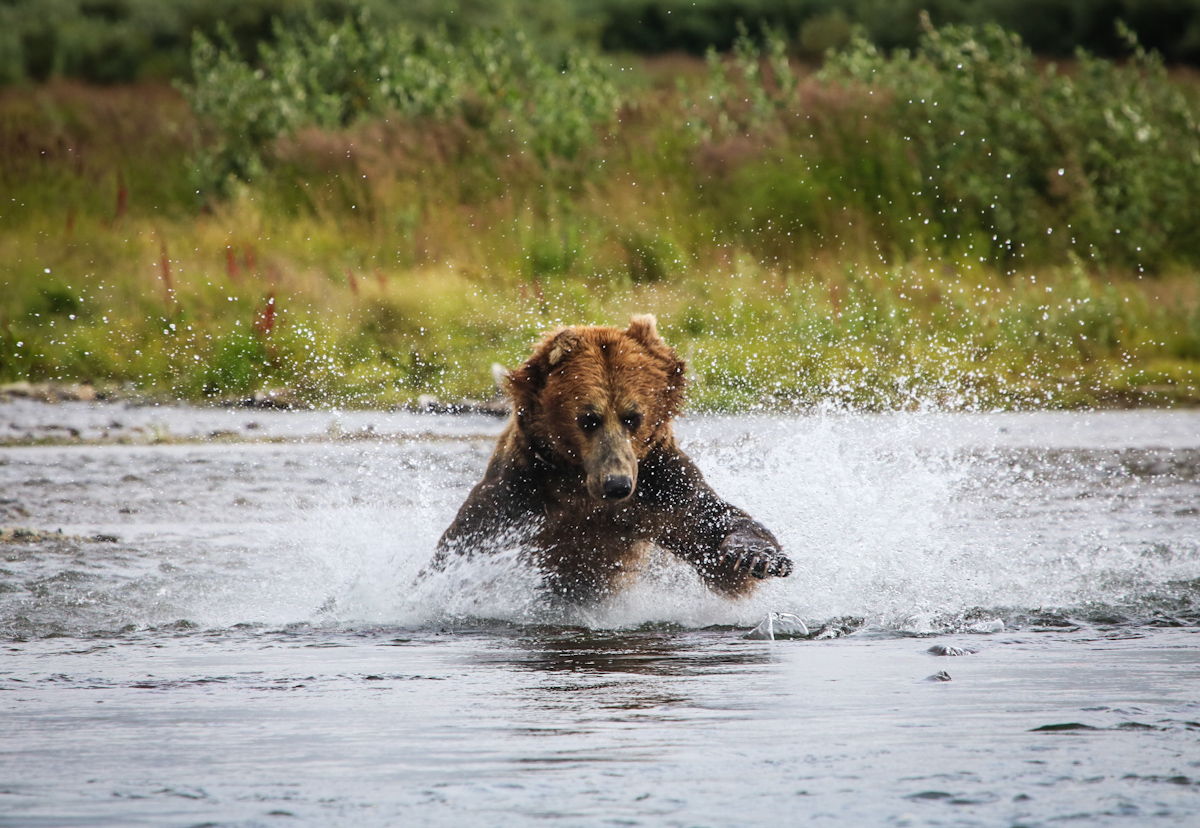
Perhaps the most remarkable part of the sockeye story comes after the fish are nearly done with their journey.
Adult Pacific salmon stop feeding as they approach spawning and use their remaining energy for reproduction. After spawning, they die.
At first glance, that may seem like the end of the story.
It is really the start of another.
During their years at sea, sockeye gather nutrients from the marine environment. When millions of salmon return to freshwater, they effectively carry nutrients from the North Pacific into Alaska’s rivers and the land around them.
- Bears pull salmon from streams and carry them onto shore.
- Eagles and other birds feed on them.
- Aquatic insects eat salmon remains.
- Rainbow trout, Dolly Varden, and other fish feed on salmon eggs and later on pieces of decaying salmon.
- Nutrients from salmon carcasses—including nitrogen and phosphorus—enter streams and the nearby land.
The ocean helps fertilize the wilderness.
Sockeye, Bears and the Forest
One of Alaska’s most iconic sights—a brown bear carrying a bright red salmon—also shows how linked this ecosystem really is.
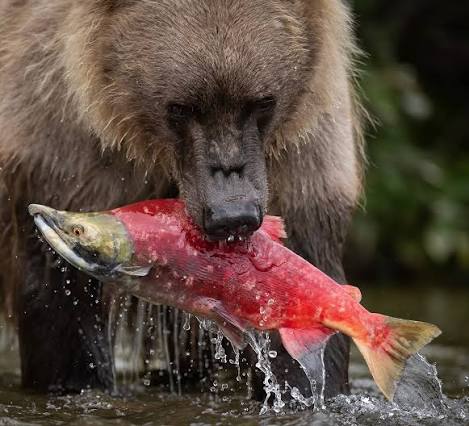
Bears often catch salmon and carry them away from the water before feeding.
They do not always eat every part of every fish.
The remains become food for scavengers and break down into the soil around them.
In this way, nutrients that came from hundreds or thousands of miles away in the ocean can eventually be added to the land around a salmon stream.
- The salmon feeds the bear.
- The remains feed insects and scavengers.
- Nutrients enter the soil and water.
- Those nutrients help support the ecosystem that will raise another generation of salmon.
Everything is connected.
Sockeye Help Create Incredible Trout Fishing
There’s another fish that gains from the sockeye migration that anglers at Iliamna River Lodge know well:
When salmon enter freshwater and begin spawning, trout move downstream and around the spawning areas where they can eat drifting salmon eggs.
For a rainbow trout, that is a rich seasonal food source.
Later in the season, pieces of salmon flesh provide another burst of calories.
This extra food helps support the healthy trout populations that have made Bristol Bay legendary.
So even an angler who comes to Alaska mainly to chase wild rainbows benefits from the yearly return of the salmon.
The fisheries are linked.
The Red Lifeblood of Wild Alaska
There is something fitting about the sockeye’s change.
They leave Alaska as small young fish.
They travel to the Pacific, where they spend years feeding and growing.
Then they return.
As they move deeper into freshwater, their silver bodies turn a distinct blood red.
And with them comes life.
- Life for bears.
- Life for eagles.
- Food for trout and Dolly Varden.
- Nutrients for streams.
- Energy that reaches the forests around those streams.
- Another generation of salmon waiting under the gravel.
The red is not just the color of a sockeye salmon.
It is the color of one of Alaska’s greatest natural cycles.
Experience the Sockeye Run at Iliamna River Lodge
There are few better places to see the scale and beauty of Alaska’s salmon country than the Bristol Bay region.
At Iliamna River Lodge, anglers are surrounded by the rivers, lakes, wildlife, and wild landscapes that make Southwest Alaska one of the world’s top fishing destinations.
For people planning fly fishing salmon in Alaska, this is the kind of place that shows why the run matters.
Come for the fishing.
But watch what is happening around you.
- Watch the salmon moving upstream.
- Look for the bears along the river.
- Watch the eagles overhead.
- Notice the rainbow trout feeding behind spawning salmon.
Once you understand what those millions of red fish mean to this landscape, you begin to see Bristol Bay in a new way.
The sockeye are not just passing through the ecosystem.
They help power it.
Sockeye Salmon Q&A
Why is Bristol Bay so important for sockeye salmon?
Bristol Bay supports the world’s largest sockeye salmon fishery, with big runs returning to river systems such as the Kvichak, Naknek, Egegik, Ugashik, and Nushagak. The Lake Iliamna region is especially important because sockeye are strongly linked to freshwater lakes, where young fish often spend one to three years before moving to the ocean.
When is the best time to see or catch sockeye salmon in the Bristol Bay and Lake Iliamna region?
The key window is usually late June through July. In the Kvichak River system draining Lake Iliamna, sockeye typically start appearing during the last week of June, with the run often peaking during the first week of July. Timing can vary from year to year because of water, temperature, and other environmental factors.
What makes sockeye salmon turn from silver to red?
Sockeye get their famous red color from carotenoid pigments in the zooplankton and small crustaceans they eat. These pigments help give sockeye flesh its orange-red color, and as the fish mature and return to freshwater to spawn, their bodies move those pigments during a major body change that creates the bright red look of spawning sockeye.
How do sockeye salmon help support the broader Alaska ecosystem?
Sockeye carry marine nutrients from the North Pacific back into freshwater systems. After spawning, they die, and their bodies feed bears, eagles, aquatic insects, trout, Dolly Varden, scavengers, and the surrounding land. Nutrients such as nitrogen and phosphorus enter streams, soils, and forests, helping power the ecosystem that will support future generations of salmon.
Why do rainbow trout benefit from the sockeye run?
When sockeye enter freshwater and begin spawning, rainbow trout often move downstream or near spawning areas to feed on drifting salmon eggs. Later, trout may also feed on pieces of decaying salmon flesh. This seasonal burst of high-calorie food helps support the healthy wild rainbow trout populations that Bristol Bay is known for.
You May Also Enjoy
A Guide to Ultimate Bristol Bay Fly Fishing in Alaska
Planning the Ultimate Alaska Fly Fishing Trip: Why Iliamna River Lodge is Your Best Bet
Rainbow Trout Fishing in Alaska