
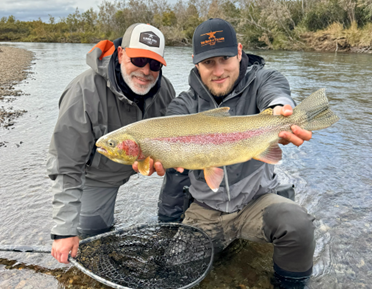
Alaska’s Wild Leopard Rainbow Trout: What Makes Them So Special
Alaska’s Wild Leopard Rainbow Trout are considered the pinnacle of trophy trout fishing. Massive, powerful, and vividly marked with deep spotting, these extraordinary fish capture the imagination of fly anglers around the world. Found in only a handful of truly intact ecosystems, Alaska’s Wild Leopard Rainbow Trout grow larger, live longer, and feed more aggressively than their lower 48 counterparts.
For many anglers, encountering one of Alaska’s Wild Leopard Rainbow Trout in clear water is a once-in-a-lifetime experience — and often the reason they return to Alaska year after year.
What Is Alaska’s Wild Leopard Rainbow Trout?
The term “Leopard Rainbow” describes large, mature, wild rainbow trout with heavy, dark spotting that thrive in the Bristol Bay region of Alaska. Alaska’s Wild Leopard Rainbow Trout develop their distinctive appearance over time due to long lifespans, rich food sources, cold clean water, and unique genetics.
In pristine systems like Bristol Bay, these trout reach their full genetic potential. Fish regularly exceed 24 inches, with some Alaska’s Wild Leopard Rainbow Trout pushing past the 30-inch mark.
Why Alaska’s Wild Leopard Rainbow Trout Grow So Large
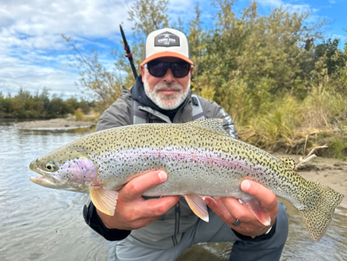
Alaska’s Wild Leopard Rainbow Trout benefit from environmental conditions rarely found elsewhere in the world.
Intact Ecosystems
Bristol Bay watersheds remain largely untouched. Rivers flow freely, spawning habitat is intact, and fish populations are naturally sustained without stocking. These wild systems allow Alaska’s Wild Leopard Rainbow Trout to thrive without pressure from habitat loss or artificial management.
Salmon-Driven Nutrients
Each summer, millions of Pacific salmon return to spawn, creating one of the largest nutrient transfers on earth. Their eggs, flesh, and fry provide an unmatched food source for resident trout.
This powerful nutrient cycle allows Alaska’s Wild Leopard Rainbow Trout to grow faster, gain significant weight, and feed heavily for months at a time.
Low Fishing Pressure
Many Alaska rivers are only accessible by floatplane for a few months each year. Limited access and strong conservation practices mean Alaska’s Wild Leopard Rainbow Trout encounter far fewer anglers compared to road-access fisheries.
Bristol Bay: The Epicenter of Alaska’s Wild Leopard Rainbow Trout
While wild rainbow trout exist throughout Alaska, Bristol Bay is widely regarded as the heart of Alaska’s Wild Leopard Rainbow Trout country.
Here, trout benefit from:
- Massive sockeye salmon runs
- Clear, cold, oxygen-rich rivers
- The deep, cold waters of Lake Iliamna
The result is a population of Alaska’s Wild Leopard Rainbow Trout that are not only large, but incredibly strong, aggressive, and healthy.
Seasonal Behavior of Alaska’s Wild Leopard Rainbow Trout
Understanding seasonal feeding patterns helps explain the impressive size of Alaska’s Wild Leopard Rainbow Trout.
Early Summer (June)
Trout feed heavily on salmon fry and aquatic insects, rapidly regaining weight after the long Alaskan winter.
Mid to Late Summer (July–August)
Spawning salmon introduce drifting eggs into the system. Alaska’s Wild Leopard Rainbow Trout concentrate in feeding lanes and grow quickly during this period.
Fall (September–October)
Trout key in on remaining eggs and decomposing salmon flesh, feeding aggressively before winter sets in.
Each phase contributes to the size, strength, and condition that define Alaska’s Wild Leopard Rainbow Trout.
How Big Do These Trout Get?
In healthy systems like Bristol Bay:
- 20–24 inch trout are common
- 26–28 inch trout are realistic targets
- Fish over 30 inches are always a possibility
More important than length is mass. Alaska’s Wild Leopard Rainbow Trout are thick, powerful fish, heavily fueled by salmon nutrients.
Fly Fishing for Alaska’s Wild Leopard Rainbow Trout
Fly selection and technique change throughout the season, but successful anglers often use:
- Salmon fry imitations
- Dry flies and nymphs
- Flesh flies
- Large streamers
Guided fishing is critical when targeting Alaska’s Wild Leopard Rainbow Trout. Reading water, understanding fish movement, and adapting to daily conditions often separates an average day from an unforgettable one.
Conservation of Alaska’s Wild Leopard Rainbow Trout
Nearly all trophy rainbow trout fisheries in Alaska operate under strict catch-and-release regulations. These conservation measures ensure that Alaska’s Wild Leopard Rainbow Trout remain healthy and abundant for future generations.
Responsible angling protects long-lived fish, preserves strong genetics, and keeps these fisheries world class.
Why Anglers Travel for Alaska’s Wild Leopard Rainbow Trout
Fishing for these Trout is about more than size. It is about wild, remote rivers, floatplane access, abundant wildlife, and pristine ecosystems operating as nature intended.
Hooking one of Alaska’s Wild Leopard Rainbow Trout in clear water is a moment that stays with anglers for life.
Final Thoughts on Alaska’s Wild Leopard Rainbow Trout
Alaska’s Wild Leopard Rainbow Trout represent what trout fishing can be when ecosystems remain intact and conservation is prioritized. Powerful, beautifully marked, and truly wild, these fish set the global standard for trophy rainbow trout.
For anglers seeking the ultimate trout experience, Alaska’s Wild Leopard Rainbow Trout offer one of the last truly wild fisheries left on earth.
You May Also Like
-
Streamer Fly Fishing in Alaska’s Bristol Bay
-
How Far in Advance Should You Book an Alaska Fishing Vacation?
-
Best Fly Fishing Destinations in Alaska
The Best Time to Fly Fish in Alaska: A Month-by-Month Guide for Iliamna River Lodge
-
Luxury Alaska Fly Fishing | Iliamna River Lodge Adventure
-
A Guide to Ultimate Bristol Bay Fly Fishing in Alaska
-
Planning the Ultimate Alaska Fly Fishing Trip: Why Iliamna River Lodge is Your Best Bet
-
Rainbow Trout Fishing in Alaska