
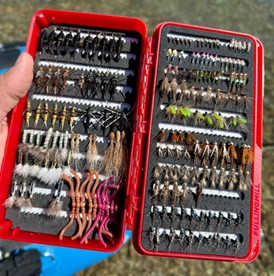
The Best Flies for Rainbow Trout in Alaska
Alaska is a world class destination for huge, wild rainbow trout. With fish regularly exceeding 24 inches and occasionally over 30, a good fly box sets you up for success when targeting these large predators. These trout live in rivers shaped by salmon, long winters, changing water, and a food cycle that shifts constantly as the season moves along. Some days they’re chasing salmon fry and sipping dry flies in shallow water. Other days they’re keyed in on flesh or large articulated streamers presented in deep buckets.
The best fly box for Alaska isn’t built around one magic pattern. It’s built around understanding what trout are feeding on throughout the season and carrying the flies that match these available food sources. So if you’re planning a trip to an Alaska Fly Fishing Lodge in the near future…keep reading.
What Makes Alaska Trout Different
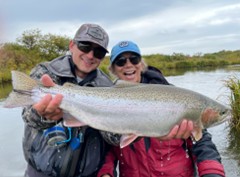 Rainbow trout in Alaska grow large because they live in nutrient rich systems. In much of southwest Alaska, especially around Bristol Bay and the Iliamna region, salmon drive everything.
As salmon push into the rivers each year, they bring an enormous amount of food with them. First it’s fry. Then eggs. Later it’s flesh. Trout feed heavily through all of it, and over time they become powerful, opportunistic fish that are willing to eat a wide range of flies if the presentation is right.
That’s why fly selection in Alaska tends to revolve around a handful of major food sources rather than dozens of overly specific patterns.
Streamers
Streamer fishing for Alaska rainbows is hard to beat.
Even in systems where eggs and flesh dominate later in the season, there are still times when moving a bigger fly is the best way to find aggressive fish. Early in the year, when trout are looking for fry and baitfish, streamers can be especially effective. Later on, they’re often the best way to move a large fish that isn’t interested in smaller, more natural presentations.
A few patterns have become staples for a reason.
Dolly Llama
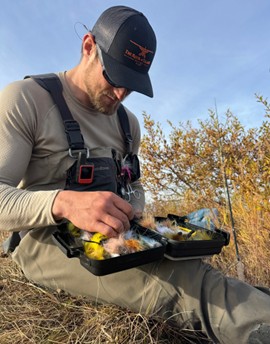 The Dolly Llama has earned its place as a staple in Alaska fly boxes. It has movement, profile, and enough bulk to produce in a lot of different water types and situations. It fishes well on the swing or stripped, and also holds up to dozens of fish.
Egg-Sucking Leech
The egg-sucking leech is one of those classic Alaska flies that just keeps producing. Essentially a bulked up wooly bugger, it suggests a few different things at once, and fish rarely seem to mind the more impressionistic profile and action.
Fry and baitfish patterns
During the early season, predatory rainbows key in on young of the year salmon fry. This calls for smaller, more subtle patterns down to a size 10. Any good Alaska streamer box should include a mix of these fry patterns as well as general baitfish profiles.
Flesh Flies
Later in the season, flesh becomes a critical part of the trophy rainbows’ diet.
As salmon begin to die after spawning, chunks of white, cream, and peach colored flesh move through the river. Trout key in hard on that food source, and there are times when a well presented flesh fly outfishes almost everything else.
The nice thing about flesh flies is that they can be fished a few different ways. In some water they’re best dead drifted naturally. In other places a slow swing or slight movement can be the ticket.
Dry Flies
Alaska isn’t usually thought of as a dry fly destination, but there are windows where the dry fly fishing is truly world class. Early season insect activity produces consistent surface feeding, with mayfly and caddis hatches coming off steadily through June and the first half of July.
You don’t need an oversized dry fly selection, the lack of pressure on these fish means that standbys like the Adams, Elk Hair Caddis, and Stimulators combined with a good drift are plenty effective.
Nymphs and Wet Flies
Nymphs don’t get talked about as much in Alaska as streamers, but they still make up a large part of a trout’s diet. Early in the season especially, before salmon take over the food cycle, trout will feed on aquatic insects in a way that feels much more like classic trout fishing. Mayfly, caddis, and stonefly nymphs all have a place in an early season fly box.
Mouse Patterns
Mouse fishing in Alaska has a reputation for a reason. Not every day is a mouse day, and not every river is perfect for it, but when conditions line up it can be one of the most exciting ways to fish for big trout. Watching a large rainbow track and eat a mouse pattern on the surface is the kind of thing people remember for a long time.
That said, mouse patterns are best treated as a specialty tool rather than the foundation of your box. They shine in the right water and at the right time, but they’re not something you should build a box around.
Stout Wire Hooks
Whatever flies you decide to bring on your Alaska trip, the hooks must be up for the task. These trout are large, powerful predators that will bend out a light wire hook faster than you can even react. Thick gauge hooks, often denoted as 2X strong, are a standard for all dry flies, nymphs, and streamers.
Building a Practical Alaska Trout Box
A good Alaska trout box doesn’t need to be huge, but it should cover the main food sources well.
A practical setup for an early season trip usually includes:
- fry patterns
- a few reliable streamers like Dolly Llamas and egg-sucking leeches
- an assortment of nymphs
- a few mouse patterns
- an assortment of standard dry flies
As the season progresses, flesh flies and large streamers should take up a larger proportion of the flies in your box.
 Final Thoughts
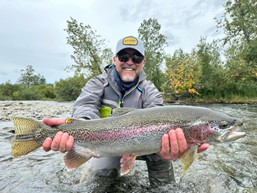
The best flies for rainbow trout in Alaska change from day to day and river to river. At the end of the day, these are just large wild trout, so hatch matching is still the name of the game.
Some days that means dries and nymphs. Some days it means flesh. Some days it means stripping a streamer through a deep bend and hoping something large decides to eat. That variety is part of what makes Alaska trout fishing so addictive.
You don’t need a giant fly collection. You just need a box that makes sense for the season, the river, and the kind of water you’re standing in. Although this serves as a general guide, reaching out to your lodge or guide before the trip is the best way to be sure that you are setting yourself up for success.
You May Also Like:
Alaska’s Wild Leopard Rainbow Trout Guide
Streamer Fly Fishing in Alaska’s Bristol Bay
How Far in Advance Should You Book an Alaska Fishing Vacation?
Fly Fishing Destinations in Alaska
The Best Time to Fly Fish in Alaska: A Month-by-Month Guide for Iliamna River Lodge
Luxury Alaska Fly Fishing Lodge | Iliamna River Lodge Adventure
Fly Fishing Salmon in Bristol Bay: Species & Techniques
Planning the Ultimate Alaska Fly Fishing Trip: Why Iliamna River Lodge is Your Best Bet
Rainbow Trout Fly Fishing in Alaska
A Guide to Ultimate Bristol Bay Fly Fishing in Alaska
Planning the Ultimate Alaska Fly Fishing Trip: Why Iliamna River Lodge is Your Best Bet